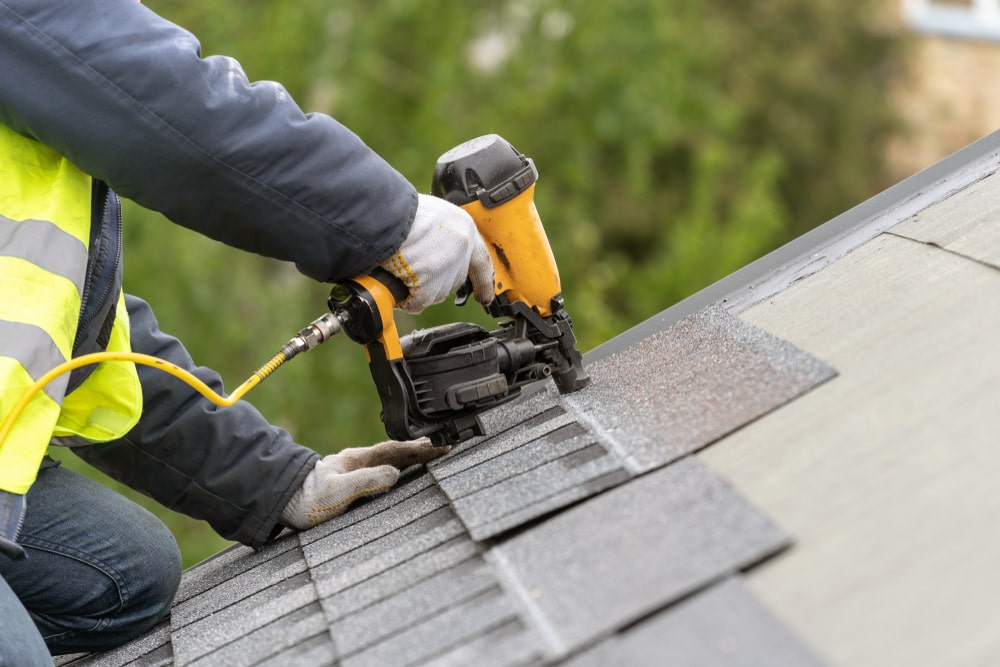
Plenty of leaks come from something small. One shingle lifted by the wind, or a split rubber seal around a vent pipe, and that’s the entire fault. Other times the leak is the first visible sign of a roof that has worn out everywhere. Inspectors from roofing companies such as Anything and Everything Roofing start by working out which of these two situations they are looking at, because the answer can change the cost by thousands of dollars.
Age Sets the Starting Point
Expected life varies by material. Three tab asphalt, the thin flat kind, gives roughly 15 to 20 years. Architectural shingles are thicker, with a layered look, and get to 25 or 30. Metal panels keep going for 40 years and often longer.
Those figures drop in hot, wet places. Asphalt bakes and turns brittle under strong sun. Moss and algae like damp air, and they keep the surface wet after the rain has stopped.
Repairs make sense on a roof that has used up less than half its years. One near the end of its expected life often isn’t worth repairing, even when the damage looks small, since more problems tend to follow the first.
Signs Visible From the Ground
A lot can be judged without a ladder.
- Missing shingles, especially after strong wind.
- Shingles with edges turned up like dry leaves.
- Bare, darker spots where the gritty top layer has rubbed away.
- A layer of grit, like coarse sand, in the gutters or at the foot of a downspout.
- A ridge that isn’t straight anymore, with a dip in the middle.
- Black streaks running down the slope.
The streaks are mostly algae and are usually cosmetic. A dipping ridge is a different story. The wood under it is probably weak or rotting, and that calls for a roofer sooner rather than later.
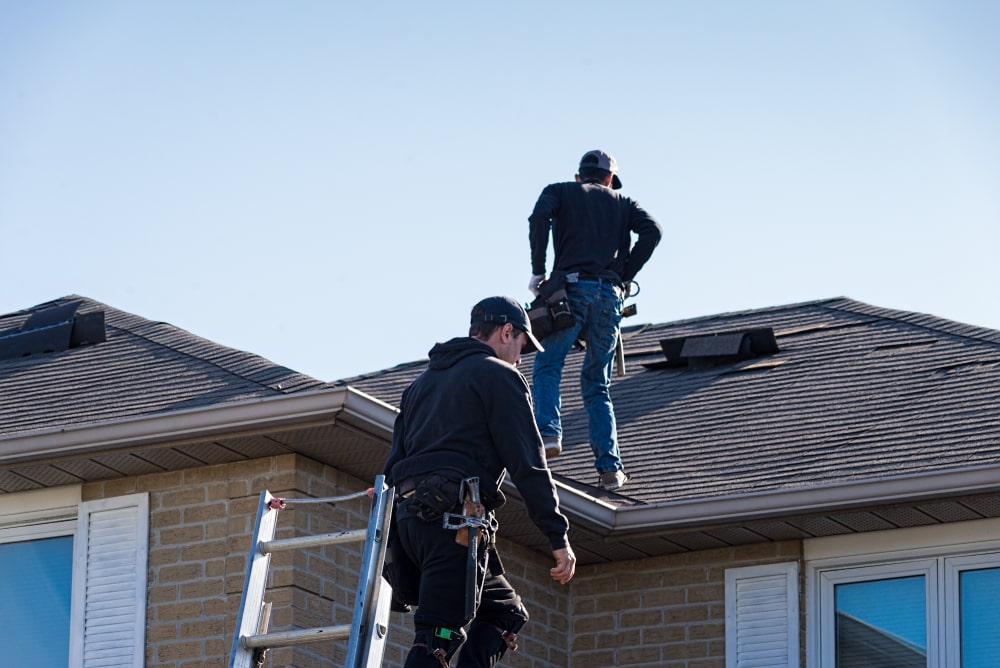
Signs Inside the House
Problems often show up in the attic before anywhere else. Pinholes of daylight between roof boards mean gaps. Watermarks on the wood are another clue, and so are nails ringed with rust. A musty smell up there in hot weather usually means the air isn’t moving enough.
The usual clues downstairs are tea coloured rings on the ceiling, or paint peeling just under it. Leaks rarely drip straight down. The water runs along a rafter first, so the stain can sit a few feet from the hole.
Homeowners who use Anything and Everything Roofing or similar contractors get photos of the problem spot, with the healthy roof around it in the same shot. On an older roof, new shingles can look out of place. Colours fade over the years, and some styles stop being made.
When Replacement Is the Better Choice
Widespread wear changes the math. When shingles are curling across most of the roof, or leaks appear in several places, repairs become a cycle. Each fix holds until the next weak spot gives way.
Soft or rotten decking is another clear sign. Decking is the layer of plywood or boards under the shingles. If it flexes underfoot, new shingles on top won’t sit or seal properly.
Some homes already have two layers of shingles. Most building codes don’t allow a third, so a full tear off down to the decking becomes the only option.
Making the Decision
These questions narrow it down.
- Roughly how many years does the roof have left?
- Does the damage sit in one place, or across several slopes?
- Does the decking hold firm when walked on?
- How many repair visits has it needed lately?
- Is storm season close, with little time to wait?
A written price for each option, side by side, takes the guesswork out. Storm damage may also be partly covered by insurance. That’s worth finding out before any work starts.